
Translate

Monday, April 4, 2016

Dame Zaha Hadid obituary

Zaha Hadid was celebrated for her fluid buildings, which often took forms resembling spilt mercury.

//
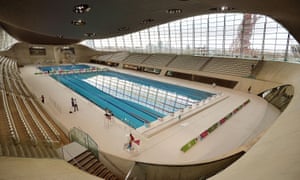
The London Aquatics Centre, designed by Zaha Hadid and built for the 2012 Olympics.
//
In the London of the early 1980s, when Zaha Hadid, who has died aged 65 after a heart attack, first opened her own office in a small room in a redundant Victorian school in Clerkenwell, the idea that she might one day become one of the world’s most celebrated and successful architects would have seemed far-fetched. At a time when most architects were still under the lash of the Prince of Wales, camouflaging their work with a constipated brick and tile skin, or decorating their facades with fragments of postmodern confectionery, Hadid was not building anything. She was working night after night, essentially living in the drawings that flowed from her pen in an apparently unstoppable flood. They conjured up glimpses of a world she had imagined but which did not, as yet, exist. For those who didn’t get it, her work was seen as just too difficult. And she wasn’t going to try to ingratiate herself with those who did not understand her.
The most visible results of that period are a series of huge paintings that hinted at what she might build if she had the chance. They did not depict anything that could be conventionally identified as a building, but instead showed jagged landscapes in which walls and roofs, inside and outside, ground plan and cross section, merged seamlessly one into another. They were more like Piranesi dreamscapes than rational proposals for orthogonal buildings. But these were not abstractions or fantasies: they were the product of Hadid’s exploration of new ways to imagine how space might work, inspired in part by the drawings of the Russian artist Kazimir Malevich, whom she discovered when she was still a student.

//
The most famous of them were made for the competition she won in 1983 to design a resort complex in Hong Kong, known as The Peak. A series of overlapping cantilevers jutted out into space, providing layers of accommodation, bars and restaurants, as well as hotel rooms. The eminent engineer Peter Rice, who had worked on the Pompidou Centre in Paris, endorsed them as entirely buildable, but the client turned out not to have the cash. It was a failure to launch that is common in most architectural careers, where unbuilt schemes outnumber built projects by a large margin. But in Hadid’s case it was the start of what became a persistent theme for her critics. Hong Kong was not built; neither, 10 years later, was the Cardiff Bay Opera House. Most recently, her competition-winning design for Tokyo’s Olympic stadium was scrapped. She was blamed for all these, unfairly attacked for her personality as well as her competence.
The ideas that she was working through in the 1980s were most convincingly realised in the Heydar Aliyev centre, the cultural complex that she built in Baku, Azerbaijan, 30 years later. It resembles a gravity-defying snow-white iceberg that erupts from the ground like a twisting rollercoaster. And unlike some of her projects in which corners have been cut by builders in a hurry, Baku was beautifully finished, inside and out. Her critics saw this building as the glorification of a repressive and sinisterly authoritarian regime. For Hadid, it was the product of the negotiation with power that has always been part of the practice of architecture.
//
Daughter of Mohammad Hadid and Wajiha al-Sabunji, she was born in Baghdad. Her father was a liberal politician who sent Zaha to a convent school despite being a Muslim. One of her brothers, Foulath, became an Oxford academic – Zaha later built a library for his college, St Antony’s. She grew up in a secular, modernising Baghdad at a time when Le Corbusier had been commissioned to build a sports complex, Frank Lloyd Wright was working on a cultural centre, and Walter Gropius had built a university campus. These were projects that she acknowleged might have inspired her choice of career, and certainly gave her a sense of the transformative power of architecture.
Later she went to an English boarding school, gained a maths degree at the American University of Beirut, and then, most importantly, studied at the Architectural Association school in London. The AA had become a hothouse, a licensed opposition in which dissidents and dreamers created an architecture, mainly on paper, that had nothing to do with the bleak architectural climate of the time.
The school in those days was led by Alvin Boyarsky, whom Hadid always cited as one of her most important influences. Her two most important teachers, apparently at the opposite ends of the architectural spectrum, were Leon Krier, who went on to become a close adviser to the Prince of Wales, and Rem Koolhaas, who uses the world brutal as a compliment. For many years, both Krier and Koolhaas presented building as a kind of sell-out. Hadid matched their reluctance to compromise but was always determined to build.
//


//

//


//

http://ara.reuters.com/article/entertainmentNews/idARAKCN0WX22L

Saturday, February 13, 2016

الجمعة 12 فبراير 2016 الرئيس الفرنسي يعين فرنسية من أصل مغربي وزيرة للثقافة

أودري أزولاي وزيرة للثقافة والاتصال في الحكومة الفرنسية
//

ويأتي تعيين أزولاي 43 عاما، التي كانت مستشارة للرئيس الفرنسي في الشؤون الثقافية لتخلف فلور بيلران.

وبهذا التعيين تصبح أودري أزولاي ثالث فرنسية من أصل مغربي تتقلد حقيبة وزارية في حكومة مانويل فالس، بعد نجاة فالو ومريم الخمري.

كما عرفت حكومة فالس تعديلات أخرى، حيث عين هولاند، أيضا، رئيس الوزراء السابق جان مارك إيرو وزيرا للخارجية خلفا للوران فابيوس الذي ترك المنصب ليرأس المجلس الدستوري الأعلى لفرنسا.


http://www.alalam.ir/news/1788496

//

//

أعلنت الرئاسة الفرنسية، اليوم الخميس، عن تعيين السيدة أودري ازولاي، ابنة المستشار الملكي اندري ازولاي، على رأس وزارة الثقافة والإعلام، وذلك خلفا لفلور بيلران..


وجاء تعيين أودري ازولاي في إطار التعديل الوزارى بفرنسا، الذي أعلنت عنه الرئاسة الفرنسية في حكومة مانويل فالس، حيث تم تعيين رئيس الوزراء الأسبق جون مارك ايرو وزيرا للخارجية، خلفا للوران فابيوس الذي ينتظر تعينه رئيسا للمجلس الدستورى.


 وأوضح الأليزيه، فى بيان اليوم، أنه تم تعيين إيمانويل كوس، الأمينة العامة لحزب "أوروبا البيئة-الخضر"، وزيرة للإسكان، فيما خلفت السيدة أودري ازولاي الوزيرة السابقة فلور بيلران على رأس وزارة الثقافة والإعلام، بينما تم تعيين جون فانسون بلاسي وزيرا للدولة للإصلاحات .


وتغادر آنيك جيراردان منصبها كوزيرة للدولة للتنمية والفرنكوفونية لتتولى وزارة الوظيفة العمومية، كما تم تعيين جولييت مياديل المتحدثة باسم الحزب الأشتراكي وزيرة للدولة المعنية بمساعدة الضحايا، فيما تم تعيين باربرا بومبيلي فى منصب وزيرة الدولة المسؤولة عن العلاقات الدولية حول المناخ.


واودري هي فرنسية من أصول مغربية، وهي ابنة  اندري أزولاي مستشار جلالة الملك محمد السادس..


وعملت أودري ازولاي مستشارة ثقافية  للرئيس الفرنسي فرنسوا هولاند، منذ يوليو 2014. وكانت اودري قاضية بادارة المحاسبات الفرنسية ومسؤولة سابقة بالمركز الوطني الفرنسي للسينما، قبل تعيينها مستشارة ثقافية للرئيس فرنسوا هولاند ووزيرة للثقافة.

وبهذا التعيين تكون أودري أزولاي ثالث فرنسية من أصل مغربي، تتقلّد حقيبة وزارية في الحكومة الفرنسية الحالية بعد نجاة فالو بلقاسم وزيرة التربية، ومريم الخمري، وزيرة العمل.

//
 جزائريون ماتصرطاتش ليهم تعيين أودري أزولاي ف الحكومة الفرنسية : ها اش قالو
//

Saturday, August 22, 2015

Saturday, June 6, 2015

Amal Shaaban Abdel-Monem Elshami Faculty: Nursing Ph.D.

Best Theses Awards, Cairo University (BTACU) Issue VII, Nov. 2014 Information System Unit 28 http://gsrd.cu.edu.eg

Name: Amel Shaaban Abdel-Monem Elshami
Faculty: Nursing Dept.: Maternal and Newborn Health Nursing Degree: Ph. D.
Title of Thesis: Impact of a structured prenatal counseling on anxiety level among women undergoing intrauterine interventional procedures

Supervisors: Prof Prof. Dr. Mohamed Momtaz,
Dr. Shadia Abdelkader
Prof. Dr. Zienab Abdelhalim
Dr. Sherif Mohamed Maher Negm

Abstract : Intrauterine interventional procedures (IUIP) during pregnancy are usually accompanied with higher level of anxiety related to anticipated pain, possible harm to pregnancy and testing results. The aim of the study was to examine the impact of a structured prenatal counseling on anxiety level among women undergoing IUIP. Non-equivalent pre-post test Quasi experimental research design was utilized.
http://www.gsrd.cu.edu.eg/nursing/Amel_%20Shaaban_%20Abdel-Monem%20_Elshami.pdf

Monday, June 1, 2015

Egyptian Student Invents New Propulsion Method. Aisha Mustafa


Aisha Mustafa patented her invention last February in ASRT.

An Egyptian physics student has successfully created a new propulsion device that could accelerate space probes and artificial satellites through quantum physics and chemical reactions instead of the current radioactive-based jets and ordinary rocket engines.
Aisha Mustafa, who has entered the active research area of spacecraft propulsion by her newly invented device, told the governmental EGYNews agency that she patented her invention last February in the Egyptian Academy of Scientific Research and Technology (ASRT).
Mustafa’s propelling device is based upon a scientific mix between quantum physics, space technology, chemical reactions and electrical sciences. Current space probes, artificial satellites, spacecrafts and space vehicles use rocket gas engines that depend on forcing a gas to the outside of the vehicle at a supersonic speed or the chemical reactions rockets which propel by solid or liquid fuels such as radionuclide or petroleum, or the electrically-propelled probes which depend on thrusting force via accelerating ions.

Adobe Flash Player not installed or older than 9.0.115!


On the contrary, Mustafa’s invention powers space vehicles by benefiting from the electric energy formed by Casimir-polder force which occurs between separate surfaces and objects in a vacuum and by the zero-point energy which is considered to be the lowest state of energy. Mustafa added that she used panels for generating electricity. The invention is related to a hypothetical concept of a jet propulsion called “Differential Sail”, which was theoretically created by NASA’s retired professor Marc G. Millis who led NASA breakthrough propulsion physics project.
In a televised interview with the famous Egyptian morning programme “Sabah El Kheir Ya Masr” (Good Morning Egypt), Mustafa, who studies physics in Sohag University, expressed her appreciation to her faculty and university staff for their efforts in helping and providing her with the materials and resources needed. Yet, at the same time she expressed her depression and sadness for the lack of a space sciences department in the Egyptian universities.
“Departments of astronomy and physics are only available. Although they are related to space sciences but unfortunately they aren’t into the specific field of my invention and they can’t practically test or implement it.”
The 19-year old girl said that lacking of a department for space sciences prevents further national research in this important field and acts as an obstacle for her to continue conducting her studies in this specific area.

Adobe Flash Player not installed or older than 9.0.115!Get Adobe Flash Player here


According to an Egyptian TV channel, “Egypt 25”, Mustafa’s supervisor, Dr. Ahmed Fikry, who heads the physics department in Sohag University, has shown great interest in his student’s invention and helped her patent it in the ASRT. “I expect this invention to be highly beneficial in several fields and areas of industries,” he assured.
On his behalf, the President of Sohag University, Dr. Nabil Nour Eldin Abdellah, said that the university facilitates what he called “Science Clubs” for intelligent and creative students who have the will and capabilities to come up with innovative scientific ideas.
“Once we knew about her (Mustafa’s) invention, we encouraged her and provided her with the budget needed through the Science Club for innovative students in the university. This is the case with any other creative student,” Abdellah explained.
Future of Space Travel
EgyptianmaAisha
The scientific field of space vehicles propulsion is astonishingly rocketing and it gains a wider attention worldwide, thanks to its vital importance for other sciences like engineering, astronomy, geology, industry and others. This is in addition to the vast areas of researches it covers and the high probability of brainstorming new creations, methods and creative tools.
Events like the retirement of NASA’s vehicle of space shuttle programme and the need for new methods for space travel at a faster, safer, cheaper and easier means pushes forwards conducting more and more researches in the field of space vehicles propulsion.
Currently, there are dozens, if not hundreds, of ideas for innovative propulsion systems which are either presently in use or in progress, or which are still eras or even a millennium-far away from our modern technologies.
One of these methods for interplanetary and interstellar travels is the “solar sail” which depends on stellar radiation pressure or laser upon ultra-thin mirrors which work like ship sails. Other accelerating methods make use of the fourth state of matter, “plasma” by thrusting and pulsing.
800px-Lunar_base_concept_dr
An Electromagnetic Catapult in a Lunar settlement
Some other ideas of innovation include “space elevators”, “space launch loops”, “space fountains”, “electromagnetic catapults”, “space chemical guns”, in addition to numerous hypothetical and theoretically-possible methods which need practical confirmations.
Mustafa nowadays aims at testing her invention at major scientific research organisations, hence the possibility of applying it in upcoming space missions.
In the next coming decades, space travel would be easier, safer, faster and cheaper, thanks to the mind of an Egyptian girl.